
Taking a passport photo of a squirmy infant or a restless toddler can be one of the most stressful parts of travel preparation. While the Department of State provides some leniency for very young children, understanding the 'White Sheet Method' will save you time and potential rejection.
Browse real passport photo examples of infant and child photos, including common mistakes like hands blocking the face or a second person in frame.
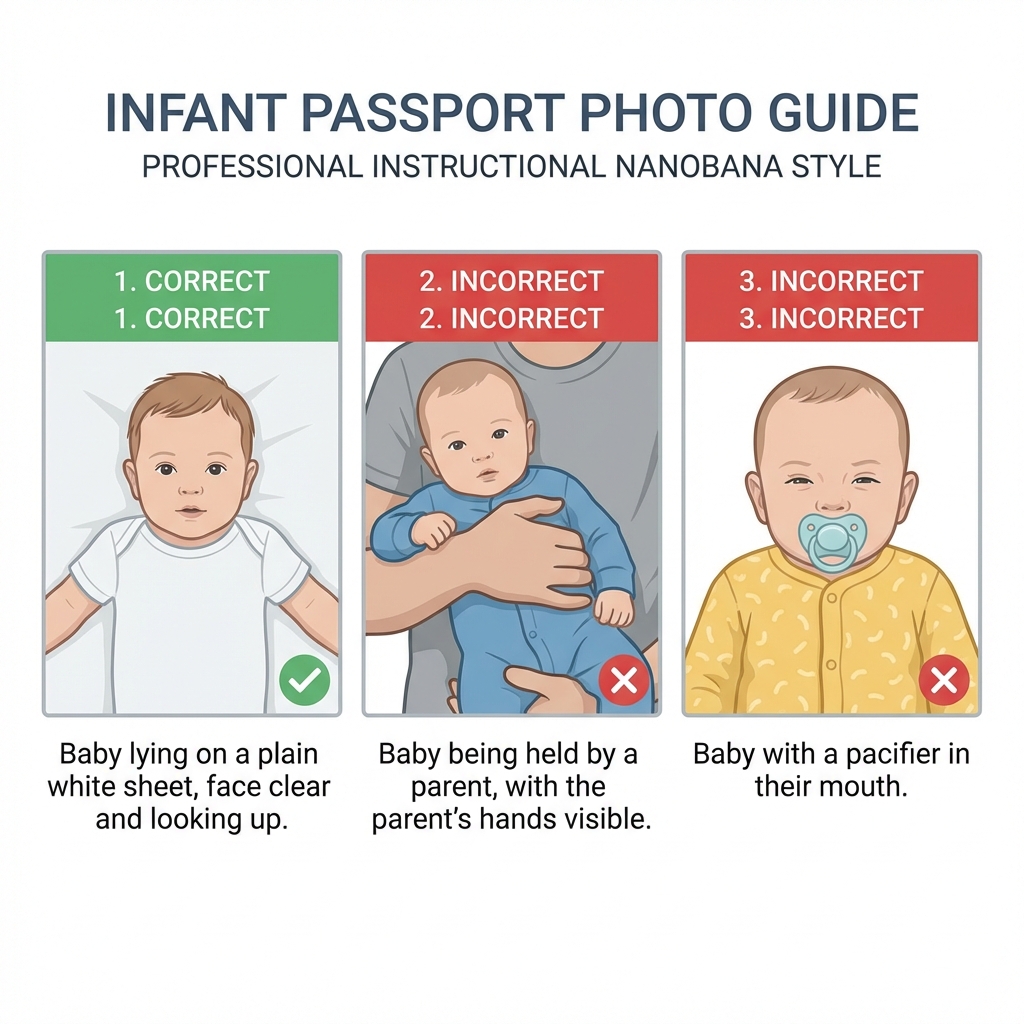
The White Sheet Method
For babies who cannot yet sit up or hold their head steady, the easiest and most compliant method is to lay them on a plain white sheet.
- Lay a flat, smooth white sheet on a comfortable surface (like a bed or floor).
- Lay the baby on their back in the center of the sheet.
- Take the photo from directly above, ensuring only the baby and the white background are in frame.
Special Leniency for Infants
Recognizing that babies are unpredictable, the official rules allow for two major exceptions for infants (under 1 year old):
- Closed Eyes: It is acceptable if a newborn's eyes are not entirely open or are closed.
- Incomplete Neutrality: A baby doesn't need to have a perfectly neutral expression, though they shouldn't be crying or making extreme faces.
Strict Rules: No Exceptions
Even for babies, these three things will result in immediate rejection:
- No Hands Visible: No part of a parent's hands or body can be in the shot, even if they are holding the baby steady.
- No Pacifiers: Pacifiers must be removed from the baby's mouth.
- No Toys/Blankets: No toys, colored blankets, or other objects should be visible in the frame.
The Car Seat Trick
Another effective technique is to drape a white sheet over a car seat. Secure the baby in the seat and take the photo from the front. This provides natural support for the head and ensures a clean background.
Uploading a baby photo? Our editor lets you zoom and crop so the edges of the car seat or sheet fall outside the frame.
Edit Baby Photo